A storefront that sells the after
- Company
- FlipSupply
- Role
- Designer and builder, self-initiated
- Scope
- Brand, storefront, Shopify theme
- Users
- Furniture flippers
- Year
- 2026
FlipSupply sells peel-and-stick wood veneer to people who refinish and resell furniture. Veneer is a hard product to sell online. A flat swatch of walnut tells you nothing about what a tired dresser will look like once it is covered. Most supply stores sell it like lumber, with a grid of squares and a price per sheet. Flippers, though, already shop by before and after, because that is how they sell their own pieces.
Two decisions that shaped it
Lead with the transformation
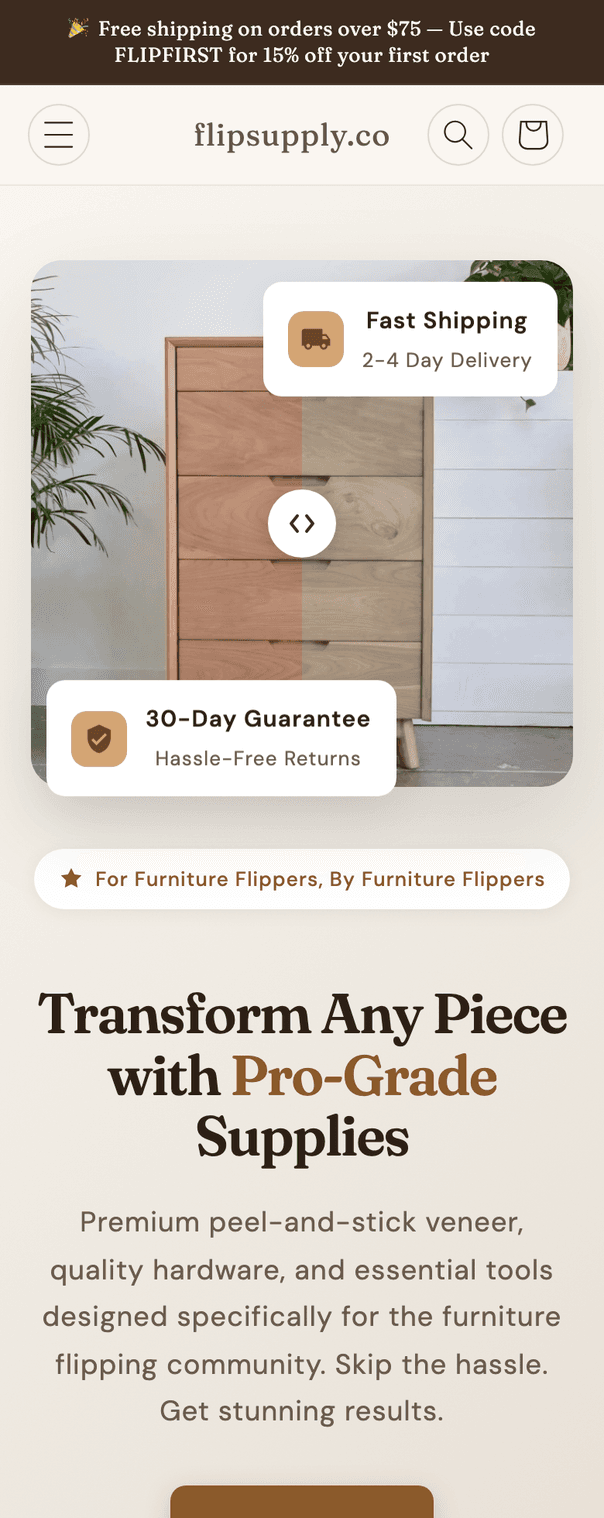
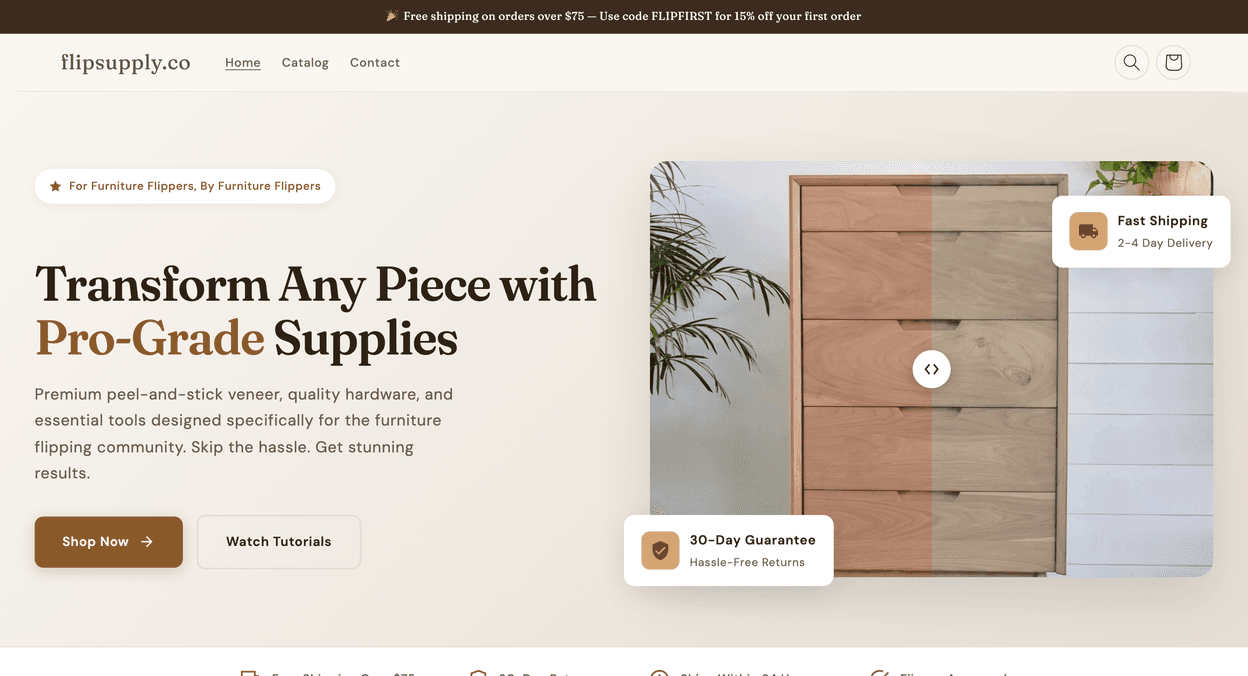
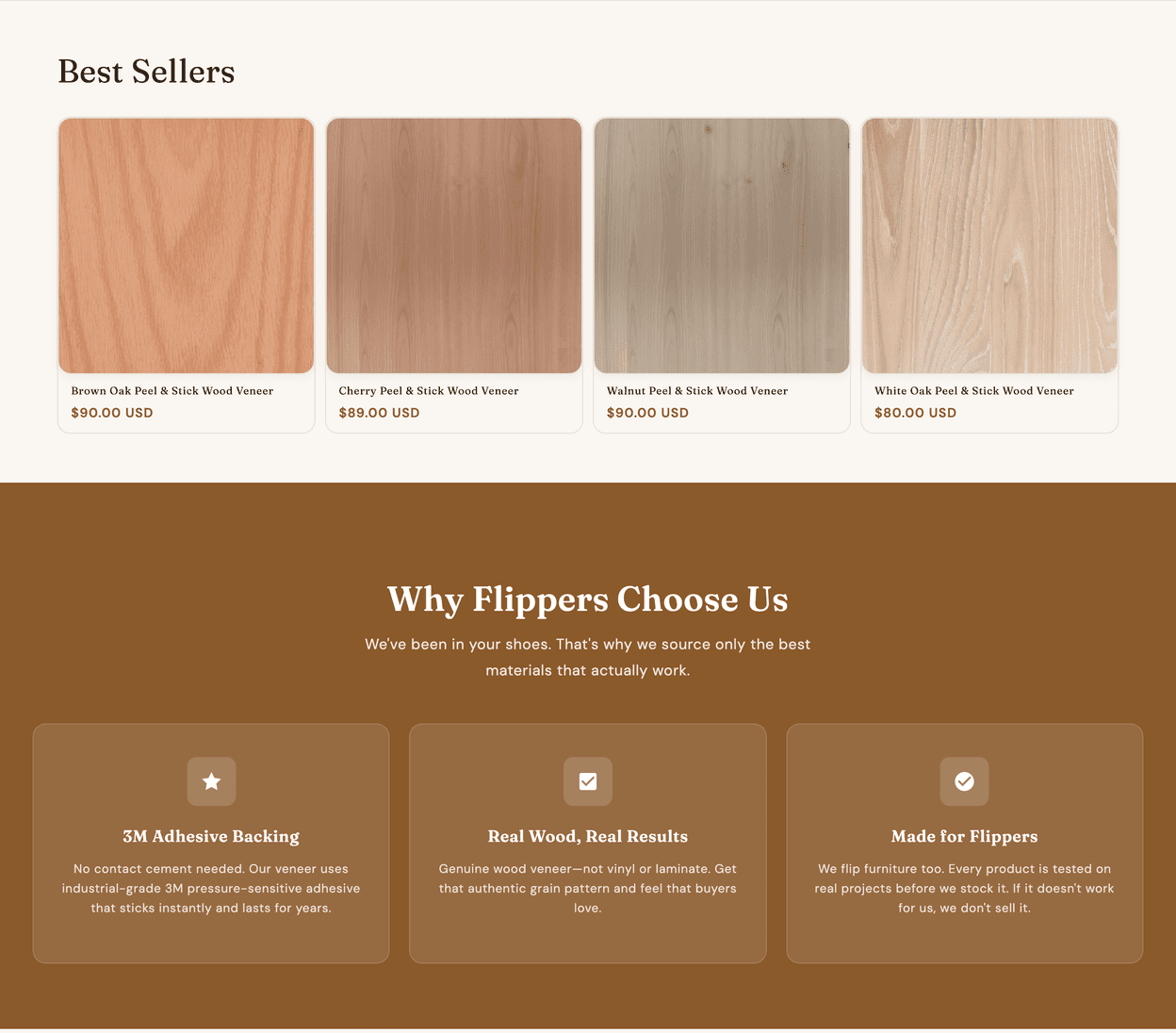
The hero is a drag-to-compare slider on one dresser, bare on one side and veneered on the other. It is the format flippers already post their own work in, so it needs no explanation, and it answers the question a swatch cannot: what will this look like on my piece. The product grid comes second, once the visitor has seen why they would want it.
Extend Dawn, do not replace it
The custom work is a set of Liquid sections added to Shopify’s Dawn theme: the hero, a trust bar, value props, categories, a testimonial and the newsletter. They do not replace Dawn. Cart, checkout, search and accounts stay stock, so they keep getting Shopify’s updates, and every custom section can be edited in the theme editor without touching code.
What shipped
The store is live at flipsupply.co with four veneers. The announcement bar carries the free-shipping threshold and a first-order code, so the offer is visible before anyone scrolls. There are no sales numbers to report yet. The design case is the decision above: show the result, then the product.
How I worked
Mocked in HTML first
The homepage and a collection page, with filters for colour, price, sheet size and availability, were built as plain HTML before any Liquid. Layout and copy were settled before Shopify was involved.
Named, then renamed
It started as FlipStock. FlipSupply says what the store sells rather than how much of it there is. The rename happened in the mockup, before it could cost anything in the theme.
Versioned themes, built with AI
I built each theme version as a separate upload, five in all, so a known-good version was always one click away. I built the Liquid and CSS with Claude and reviewed every section in the theme editor before publishing.
What I would change
The store promises more than it stocks. Two of the three categories say Coming Soon, and the Learn and Support footer columns have nothing behind them yet. A store with one category that is complete reads as more trustworthy than three that are mostly placeholders. I would launch with veneer only and add hardware and tools when they exist.