Recommended because it fits, not because it pays
- Company
- Updater
- Role
- Design lead
- Scope
- Results page merchandising
- Users
- Movers buying internet in the Mover App
- Year
- 2026
The internet step asked movers three questions, then ignored every answer. Everyone saw the same flat list of plans and a sort dropdown, so the quiz was friction that returned nothing, and changing what the page promoted took an engineering ticket. The business wanted average revenue per order up 4%, about $10 on $237, without hurting the order rate. Movers wanted something simpler: which plan fits a home they have not lived in yet.
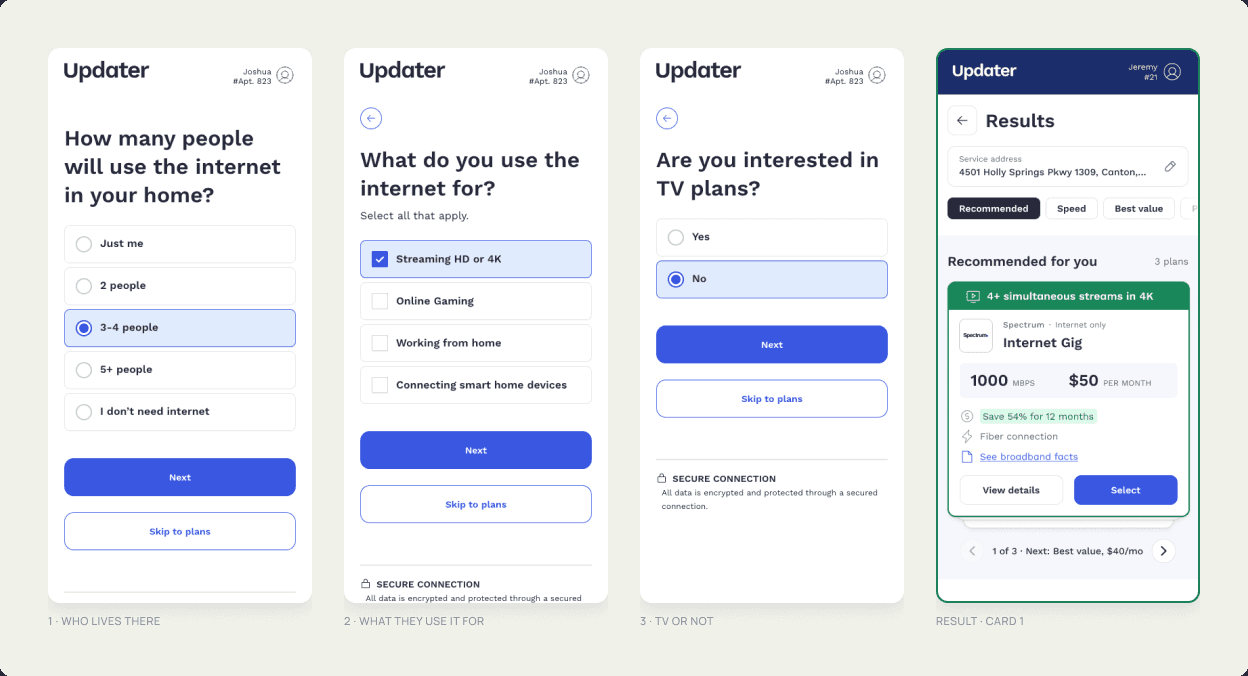
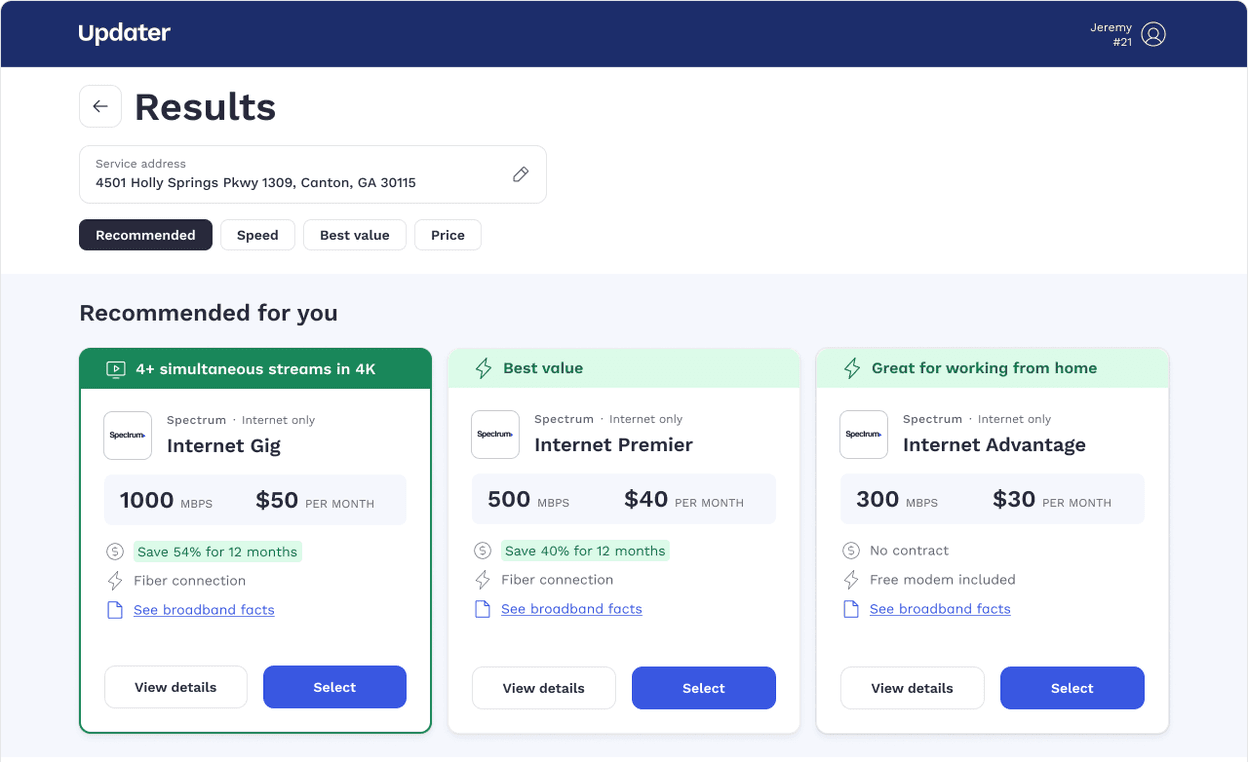
Two decisions that shaped it
Fit decides, margin only breaks ties
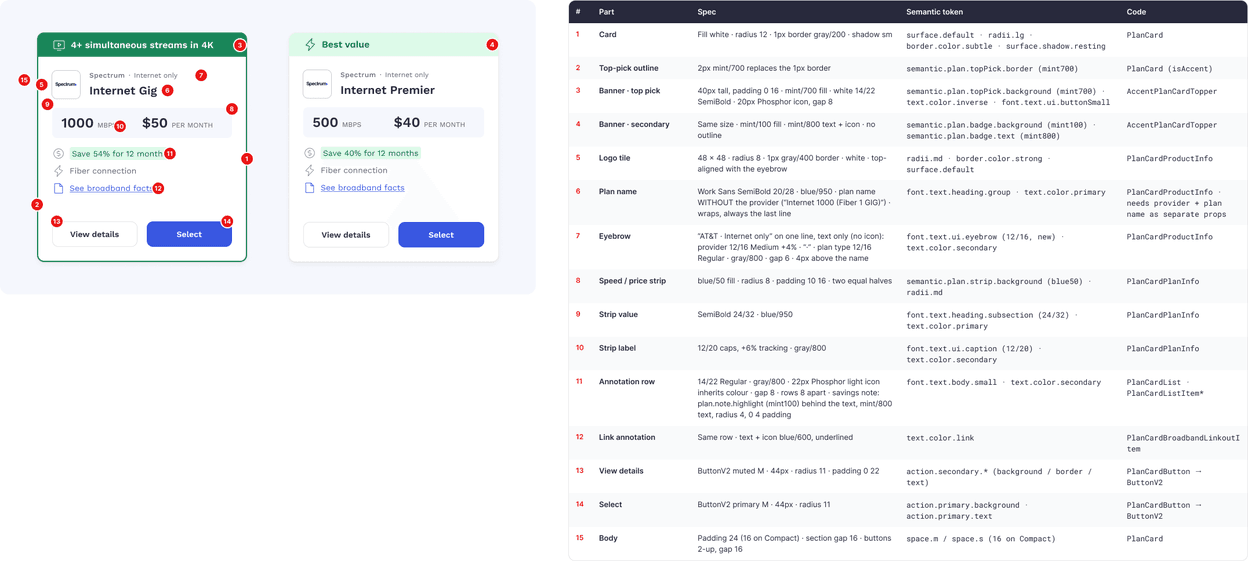
Every plan is scored against what the mover said they use the internet for, with a reject band, an acceptable band and an ideal band per use. Business weighting only acts when two plans land within a tie band: 5 points for who becomes Card 1, 15 for the rest of the order. That is what lets the page say “recommended for you” and mean it. The first spec anchored the curves to abstract bandwidth minimums; against the real 300, 500 and 1000 Mbps inventory, every plan scored the same except for gaming. Version 2 rescaled every threshold to the plans we actually sell.
One hero, and everyone else is secondary
Only Card 1 gets the solid badge. Every other card gets the quiet one, whatever produced it, and an active promo turns it coral. Quiz badges rank by how bad it is to under-provision, not by how often an answer is picked: gaming, then working from home, streaming, smart home. When quiz data is thin, fallbacks fill in: Fastest, Most popular, Best value, Limited-time offer. The copy names the outcome, “4+ simultaneous streams in 4K”, not the spec.
What happened
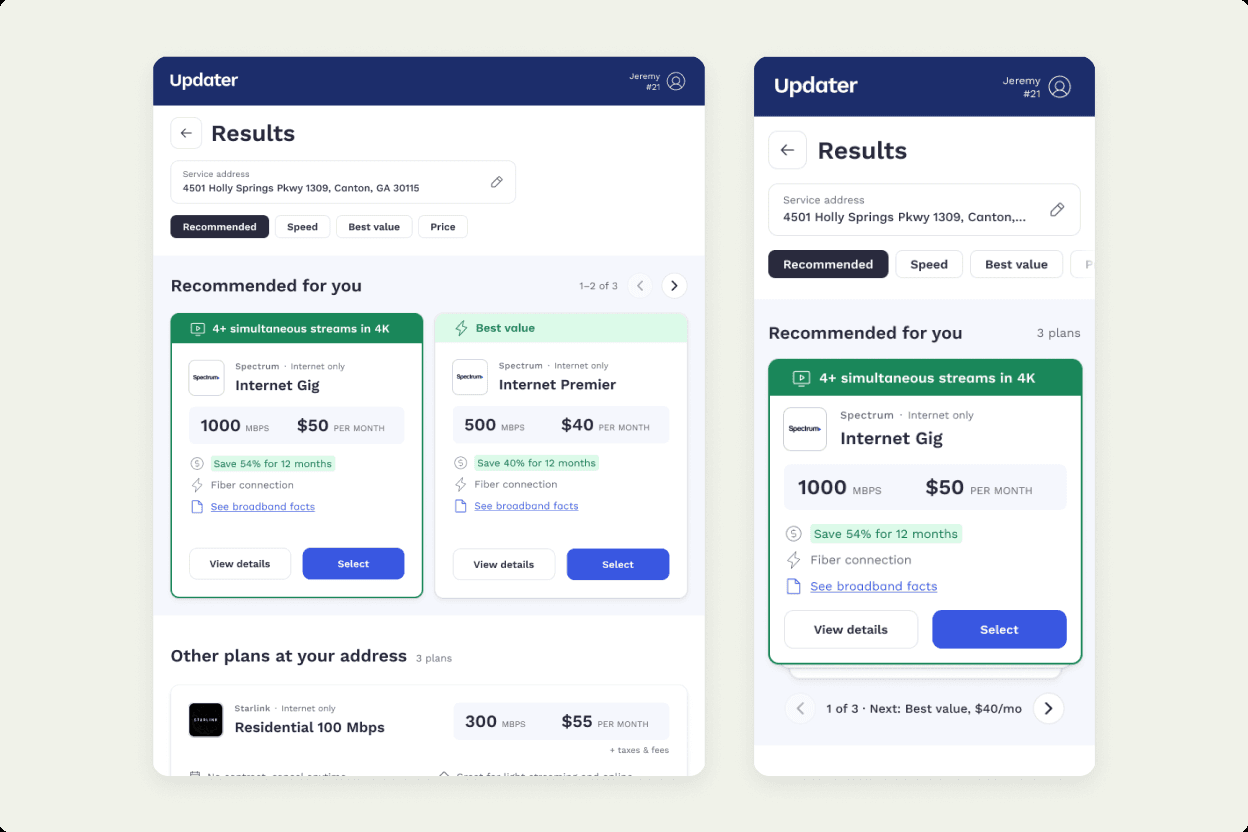
Phase 1 shipped quiz-matched badges, the showcase with “Other plans” below it and four sort pills, with events that record which section, pill and badge a mover saw when they chose. It went into an A/B test on August 7 and reached 100% of movers on September 25.
How I worked
Off Figma Make, into React
The prototype ran the pill sort, the changing headers and the hero logic on real rules, so stakeholders reviewed behaviour, not frames.
A spec engineering could argue with
Thresholds and pseudocode instead of adjectives, which is how an engineer caught the scoring flaw before it shipped.
One social-proof pattern out of five
Inside the card, backed by real purchases, and hidden in ZIP codes where the number would be weak.
What I would change
The fit thresholds were starting values. I would validate them against real usage before the engine decides anything, and pick the counter-metric up front. Revenue per order on its own rewards overselling. Churn at 3, 6 and 12 months, or satisfaction at the first bill, is what proves a recommendation was right rather than just persuasive.